
The Hivemind Report 🧪: Analyzing the Consumer Backlash to AI-Generated Art in the Call of Duty Franchise
I asked an AI researcher (Google NotebookLM) to analyze why Reddit is screaming. Here is the executive summary of their rage.

Introduction: A Flashpoint in AAA Gaming
The Call of Duty franchise stands as a colossus in the video game industry, a dominant cultural and commercial force that has defined a generation of online multiplayer gaming. However, its latest installment, Call of Duty: Black Ops 7, became the epicenter of a significant consumer backlash, not over gameplay mechanics or narrative, but over the widespread use of AI-generated art for in-game assets like “calling cards.” This controversy represents a critical flashpoint in the ongoing debate surrounding artificial intelligence in creative fields. This case study analyzes the multifaceted player reaction based on public commentary, exploring criticisms related to product quality, brand identity, corporate strategy, and the broader implications this incident holds for the future of the AAA video game industry.
1.0 The Catalyst: Identifying the “AI Slop”
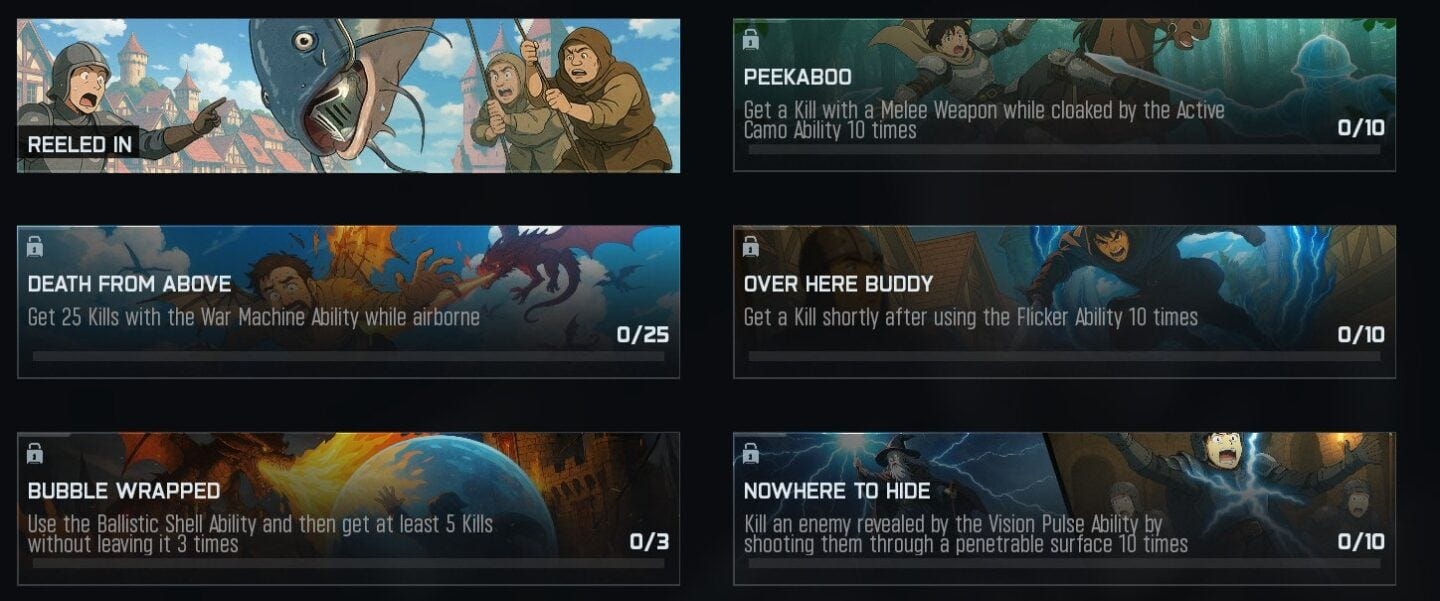
The Call of Duty: Black Ops 7 controversy is a textbook case of brand dissonance, where the publisher’s cost-saving measures were so aesthetically jarring that the player base immediately and derisively identified the source: low-effort AI generation. This instant recognition of what many users termed “AI Slop” was not based on technical flaws alone, but on a collection of visual and thematic incongruities that broke from the franchise’s established identity.
Players’ identification of the content as AI-generated stemmed from several primary critiques, which were voiced consistently across public forums:
Aesthetic Incongruity: Users were quick to point out that the art styles were thematically jarring for a military-themed shooter. The assets were described as “medieval looking shit,” “ghibli piss filter,” “anime shit,” and reminiscent of a “Dragon Quest style.” This thematic dissonance prompted one user to ask, “Why the hell is it all medieval looking shit? Isn’t this game supposed to be set in the future?” This clash with the game’s setting was a primary red flag for many.
Generic and Low-Effort Appearance: The art was widely perceived as lacking originality and human effort. Commenters noted it was the “same garbage distinct style... that anyone can get in a few minutes” using common AI models like Midjourney or ChatGPT. This sentiment was encapsulated by one user who suggested the art looks like “it looks like an intern spent 15 seconds typing “cool fantasy knight Studio Ghibli style” into a prompt box.”
Historical Precedent: Engaged players noted this was not the first time AI-generated art had appeared in the franchise. Previous titles had reportedly used it on a “smaller scale” for assets like “calling card designs” and emblems. However, the implementation in Black Ops 7 was seen as a significant escalation, with one user describing it as a “much more extreme extent.”
This immediate identification of “AI slop” was merely the spark; the resulting firestorm was fueled by deeper player anxieties concerning the game’s quality, identity, and fundamental value proposition.
2.0 Core Criticisms: A Crisis of Quality, Identity, and Value
The intense player backlash was not a simple, knee-jerk reaction against AI technology itself. Instead, it represented a complex response to what many perceived as a fundamental breach of trust between the developer and the consumer. The core criticisms leveled against the use of AI-generated art targeted the game’s overall quality, the coherence of the franchise’s identity, and the economic value proposition offered to players paying a premium price.
2.1 Perceived Decline in Quality and Effort
A primary driver of the backlash was the widespread sentiment that the AI-generated assets signified a tangible and severe drop in product quality. Across discussions, players described the content with terms such as “egregious,” “awful,” “soulless,” “slop,” and “vitriolic garbage.” This perception of declining quality was often framed by a contrast with the franchise’s celebrated past.
Many users argued that Call of Duty was not “always... creatively bankrupt,” pointing to the artistry of earlier titles. Games like World at War and the original Modern Warfare were held up as examples of products “made by people who cared,” which demonstrated clear “passion and creativity.” This historical context fueled the feeling that the latest installment represented a significant creative regression.
2.2 Erosion of Brand Identity
The use of generic, thematically inconsistent AI art was seen as a direct assault on the Call of Duty brand identity. Players felt that the random, often bizarre styles — from medieval fantasy to anime — showed a lack of creative direction and care for the game’s world. This sentiment was perfectly summarized by one user who stated, “Don’t think even cod know what their identity is anymore.”
While some acknowledged that in-game calling cards have “always been random shit,” the move to AI generation was interpreted as a new level of carelessness. One commenter contrasted past variety with the current state: “now it’s clear that some random producer just threw the names into sora and said make an image to go along with this name.” This shift was seen as a move from a diverse collection of individual human efforts to a homogenous, automated output dictated by a single, lazy prompt.
2.3 The Economic Disconnect: Questioning the $70 Price Tag
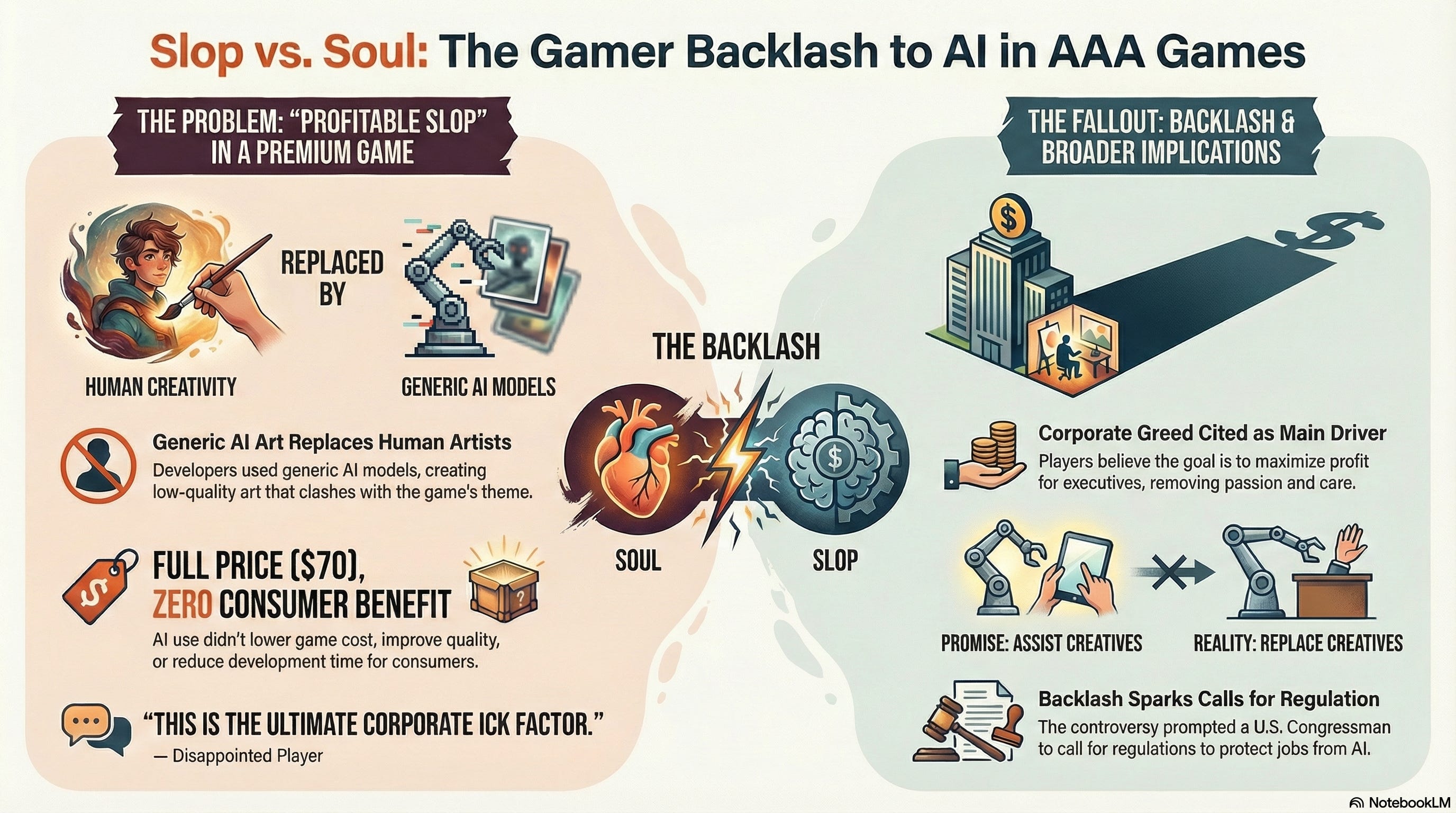
A critical component of the backlash was the economic argument. Players questioned the rationale behind a multi-billion dollar company using cost-cutting AI tools in a full-priced, premium product. The move was widely seen as a strategy to increase corporate profits at the direct expense of the consumer, who received a lower-quality product for the same high price.
The core economic complaints were clear and consistent:
No Consumer Savings: The use of AI provided no tangible benefit to the player. As one user pointed out, it “didn’t lower the game’s cost,” and players are “still going to be charged $70+ every single time.”
Profit Maximization: The decision was overwhelmingly interpreted as a purely profit-driven move designed for “more money for the higher ups / stock holders.” Commenters described it as “squeezing the last few drops of profit out of the corpse of their product,” driven by a corporate obsession with “infinite growth.”
Replacing Human Artists: The backlash was amplified by the belief that this decision displaced human artists. Users argued that a “triple A studio has the money to pay people” and that the use of AI suggested they “can’t afford real artists.” An artist in the discussion posed a direct challenge to the company’s strategy, asking, “why should I give Activision my money if they’re not going to pay artists?”
This perceived economic betrayal highlighted a stark disagreement within the community itself: whether this decline in quality even mattered to the majority of players.
3.0 The Player Base Divide: Does the “Casual Gamer” Care?
The controversy over AI-generated art also exposed a perceived fault line within the Call of Duty player base itself. The intense debate highlighted a significant disconnect between the highly engaged, critical fans who frequent online forums and a purportedly larger, more indifferent casual audience that forms the bedrock of the franchise’s commercial success.
A prominent argument within the discussion was that the vast majority of players are either unaware of or unconcerned by the use of AI art. Commenters asserted that the “COD userbase couldn’t care less about this” and that “Casual gamers can’t even tell what’s ai or not.” This segment of the audience was described as players who bought a console for a few key franchises like “GTA, FIFA and CoD” and are less invested in the nuances of game development.
In response, more critical players argued that the indifference of a majority does not invalidate the criticism. As one user countered, “Its important to remain critical and point this out even if some people dont care.” This highlights a tension between holding companies accountable and the market reality that widespread outrage in niche communities may not translate to a meaningful impact on sales.
Ultimately, there was a prevailing sense of resignation that as long as the game continues to sell well to its core casual audience, the company has no financial incentive to change its practices. This sentiment was captured in the comparison that “Cod bros are like NFL game bros they always will buy it.”
This schism in the player base reveals a critical business vulnerability for Activision: while the casual majority may drive short-term sales, the erosion of trust with engaged, vocal fans poses a long-term threat to brand loyalty and market leadership.
4.0 Broader Implications: A Glimpse into the Future of Gaming
The Call of Duty controversy serves as a crucial case study for the integration of AI into creative industries. The passionate and detailed player reaction reflects anxieties that extend far beyond a single video game, touching on fundamental concerns about artistic integrity, corporate ethics, and the evolving relationship between technology and human creativity.
4.1 The “Enshittification” of AAA Gaming
Many players fear that this incident is not an isolated misstep but rather the “next stage of enshittification” in the AAA gaming space. This theory posits that companies will continually lower product quality to find the “most atrocious shit people are willing to pay for that costs them the absolute minimum to produce.” The philosophical argument, as one user articulated, is that removing the human element from art implicitly tells the consumer “they are just a mindless consumer,” reducing the artistic exchange to a simple, unthinking transaction. This philosophical critique is the cultural counterpart to the economic complaints; players feel they are not only being overcharged for a lower-quality product but are also being philosophically devalued, their relationship with the art reduced from appreciative participant to mere consumption unit.
4.2 The Broken Promise of AI
The backlash also reveals a deep and growing cynicism regarding the corporate application of AI. A common narrative sold by tech evangelists is that AI would “offload the ‘tedious’ work” from human creators, freeing them to focus on more artistic endeavors. The reality perceived by players was a stark contradiction to this promise. As one user bluntly stated, “So that was a fucking lie...”
This sentiment was echoed in a widely shared lament that captured the dystopian inversion of AI’s potential: “I want AI to do my dishes and clean the house so I can spend more time making art and music. Instead we have AI making art and music while we are left to do dishes and chores.”
4.3 Legitimate vs. Cynical AI Applications
Despite the overwhelming negativity, user discussions revealed a nuanced understanding of AI’s potential in game development. Players largely differentiated between valuable, technologically advanced applications and what they perceived as cynical, cost-cutting implementations.
Perceived Legitimate Uses of AI ↔️ Perceived Cynical Uses of AI
Real-time upscaling, denoising ↔️ Replacing artists for calling cards and emblems
Simulating light transport, protein folding ↔️ Low priority art and text generation
Assisting developers with tedious work (e.g., concept ideas) ↔️ Generating final art assets for a $70 game
Creating things “impossible or impractical to do with human labor” ↔️ Using generic, off-the-shelf models with low-effort prompts
As the debate over AI’s role in the industry intensified, the controversy’s reach extended beyond gaming forums, catching the attention of lawmakers and escalating into a national political discussion.
5.0 The Political Echo: Spurring Calls for Regulation
The backlash against Call of Duty: Black Ops 7’s use of AI transcended typical gaming forums and ignited a broader political discourse. The controversy gained enough traction to attract the attention of a U.S. Congressman, who publicly weighed in on the matter, signaling that the intersection of AI, labor, and creative industries is becoming a salient political issue.
The debate that emerged from this incident touched upon several key themes related to regulation and economic policy:
Protecting Jobs: The most direct political call to action came from the Congressman, who advocated for “regulations that prevent companies from using AI to eliminate jobs.” This reflects a growing concern that corporations will leverage AI primarily as a tool for workforce reduction.
Economic Justice: The argument was repeatedly made that companies are using AI to cut employee costs “while still charging full price,” ensuring that none of the efficiency savings are passed on to the consumer. This frames the issue not just as a labor problem, but as one of consumer rights and corporate fairness.
The “Lump of Labor Fallacy” Debate: A significant counter-argument emerged, with many users invoking the “lump of labor fallacy.” They argued that technological progress has always displaced jobs and that AI is no different from past transformative innovations like the internet, automobiles, or heavy machinery, which ultimately created new forms of employment.
Challenges of Regulation: Users also pointed out the immense practical difficulties in regulating AI use. Key challenges included how to legally define what constitutes AI-generated content, how to reliably detect its use without invasive audits, and the risk that heavy-handed rules based on self-reporting could “harm honest studios while benefiting dishonest studios” who simply lie about their methods.
This political dimension demonstrates that decisions made within the video game industry can have far-reaching consequences, serving as a catalyst for national conversations on the future of labor and technology.
6.0 Conclusion: Key Takeaways from a Contentious Case
The consumer backlash against AI-generated art in Call of Duty: Black Ops 7 is more than a fleeting controversy; it is a landmark event for the video game industry. It illustrates the complex, intersecting anxieties that players have about quality, corporate greed, artistic integrity, and the role of human creativity in a technologically advancing world. The publisher’s decision, likely intended as a minor cost-saving measure on peripheral assets, instead triggered a firestorm of criticism that damaged the brand’s reputation and drew the attention of federal lawmakers. This case reveals a profound disconnect between a corporation’s pursuit of efficiency and its audience’s expectation of value and creative authenticity in a premium entertainment product.
More Than Just “Bad Art”: The backlash was not merely about poor aesthetics. It was a multifaceted response to a perceived decline in quality, a loss of coherent brand identity, and a cynical corporate strategy that prioritized profit over consumer value.
A Referendum on Corporate AI Strategy: The incident serves as a stark warning to major publishers that implementing AI in a low-effort, aesthetically jarring, and purely cost-cutting manner can lead to significant reputational damage and alienate a core audience that still values human artistry.
Catalyst for a Wider Debate: The controversy transcended the gaming community, igniting broader conversations about the future of creative labor, the ethics of AI in art, and the potential need for government regulation, demonstrating the increasing cultural and political relevance of the video game industry.
Estimated Metrics (Based on Source Excerpts)
The sources consist of excerpts from several different Reddit threads across multiple subreddits (r_antiai, r_gaming, r_Games, r_shittygamedetails, r_Ai_art_is_not_art, r_CallOfDuty, r_technol).
10 distinct titles/subreddits
Estimated Total Comments: Highly variable, likely over 3,000
Several comment chains display large reply counts, including 71 replies, 43 replies, 557 replies, 702 replies, 500 replies, and 338 replies.
Subscribe to get this signal in your inbox every week.
P.S. Can’t wait for the next issue? Join the Telegram Channel for daily updates and builder commentary.
A Note on Independence: Stripe isn’t available in my country, so I cannot monetize this blog the traditional way. If you value this work, you can help cover my server costs and agent subscriptions — effectively becoming my nano-angel investor.